




Thank you! Your submission has been received!
Oops! Something went wrong while submitting the form.





In a fast-paced digital landscape, where time is of the essence and innovation reigns supreme, organizations are seeking ways to streamline their software delivery processes. Enter DevOps automation, the dynamic fusion of development and operations practices, armed with the power to transform the development landscape. DevOps enables teams to break down silos, collaborate seamlessly, and accelerate software delivery. In fact, with DevOps automation, you can unlock a realm of endless possibilities, where your software releases are impeccable, your teams are aligned, and your business soars to new heights. Therefore, organizations adopting DevOps automation experience a staggering 63% reduction in overall development time. That is not all! Studies show that businesses embracing DevOps automation achieved a remarkable 46% increase in software quality, leading to higher customer satisfaction and retention rates. With these compelling statistics in mind, DevOps automation is the game-changing solution that revolutionizes how software is developed, tested, and deployed. Therefore, to navigate the automation journey successfully, organizations need to effectively implement and leverage the benefits of DevOps automation. So, understanding the core concepts of DevOps automation is a mandate to lay the foundation for effective implementation, collaboration, tool selection, problem-solving, scalability, and futureproofing, and driving business success. The core concepts are:
After understanding the core concepts of DevOps, organizations can leverage the building blocks to facilitate the implementation of DevOps practices effectively. The key building blocks for DevOps automation are:
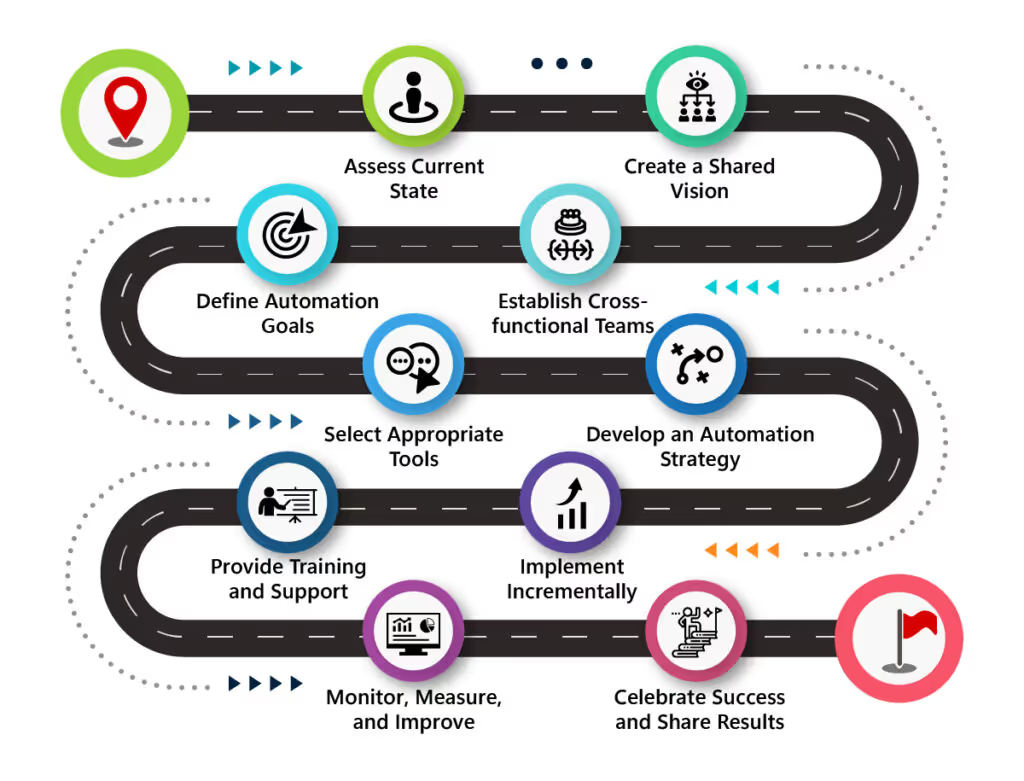
Embracing DevOps automation in an organization requires careful planning, collaboration, and a systematic approach. Here are the key steps to effectively adopt and embrace DevOps automation:
Implementing DevOps automation in your organization can have a range of benefits like:
Do you want to take a leap and embrace DevOps for accelerated software delivery?
Here are some best practices that organizations should adopt to optimize efficiency, collaboration, and quality throughout the software delivery lifecycle.
But, implementing DevOps automation can pose challenges for organizations.
Some familiar challenges and the ways to resolve them are listed below:
As the technology landscape evolves, latest trends and practices emerge within the domain of DevOps automation. Understanding these trends will help organizations stay ahead and leverage innovative technologies and methodologies.
Serverless Computing: Serverless computing, represented by platforms like AWS Lambda, Azure Functions, and Google Cloud Functions, enables organizations to build and run applications without the need to manage underlying infrastructure. In serverless architectures, developers focus solely on writing code, while the cloud provider handles infrastructure scaling and management. Serverless computing offers cost-effectiveness, scalability, and reduced operational overhead. Machine Learning Ops (MLOps): As machine learning applications become more prevalent, MLOps has emerged as a discipline that combines machine learning and DevOps principles. MLOps aims to streamline the lifecycle of machine learning models, ensuring reproducibility, scalability, and reliability in production environments. By integrating automation, version control, and continuous integration into machine learning workflows, organizations can accelerate the deployment and management of AI (Artificial Intelligence) models. Cloud-Native Architectures: Cloud-native architectures are designed to harness the full potential of cloud computing environments. These architectures leverage cloud services, microservices, and containers to build scalable, resilient, and highly available applications. By embracing cloud-native technologies, organizations can achieve greater flexibility, elasticity, and cost efficiency. Cloud-native practices align well with DevOps automation, as they emphasize scalability, automation, and rapid deployments. In a rapidly evolving technology landscape of 2023, embracing DevOps automation is paramount for organizations to maintain a competitive edge. At WaferWire Cloud Technologies, we specialize in delivering cutting-edge DevOps services that propel businesses forward. With a firm grasp of the core concepts and leveraging the building blocks, we help organizations implement best practices and stay ahead of emerging trends. Our expert team empowers you to unlock the full potential of DevOps automation, enabling faster time-to-market, higher quality software, and improved operational efficiency. Embrace automation, collaboration, and continuous improvement with WaferWire Cloud Technologies as your trusted partner. Visit www.waferwire.com or write to us at info@waferwire.com today and embark on an exciting journey where DevOps automation leads to innovation and success.




In a fast-paced digital landscape, where time is of the essence and innovation reigns supreme, organizations are seeking ways to streamline their software delivery processes. Enter DevOps automation, the dynamic fusion of development and operations practices, armed with the power to transform the development landscape. DevOps enables teams to break down silos, collaborate seamlessly, and accelerate software delivery. In fact, with DevOps automation, you can unlock a realm of endless possibilities, where your software releases are impeccable, your teams are aligned, and your business soars to new heights. Therefore, organizations adopting DevOps automation experience a staggering 63% reduction in overall development time. That is not all! Studies show that businesses embracing DevOps automation achieved a remarkable 46% increase in software quality, leading to higher customer satisfaction and retention rates. With these compelling statistics in mind, DevOps automation is the game-changing solution that revolutionizes how software is developed, tested, and deployed. Therefore, to navigate the automation journey successfully, organizations need to effectively implement and leverage the benefits of DevOps automation. So, understanding the core concepts of DevOps automation is a mandate to lay the foundation for effective implementation, collaboration, tool selection, problem-solving, scalability, and futureproofing, and driving business success. The core concepts are:
After understanding the core concepts of DevOps, organizations can leverage the building blocks to facilitate the implementation of DevOps practices effectively. The key building blocks for DevOps automation are:
Embracing DevOps automation in an organization requires careful planning, collaboration, and a systematic approach. Here are the key steps to effectively adopt and embrace DevOps automation:
Implementing DevOps automation in your organization can have a range of benefits like:
Do you want to take a leap and embrace DevOps for accelerated software delivery?
Here are some best practices that organizations should adopt to optimize efficiency, collaboration, and quality throughout the software delivery lifecycle.
But, implementing DevOps automation can pose challenges for organizations.
Some familiar challenges and the ways to resolve them are listed below:
As the technology landscape evolves, latest trends and practices emerge within the domain of DevOps automation. Understanding these trends will help organizations stay ahead and leverage innovative technologies and methodologies.
Serverless Computing: Serverless computing, represented by platforms like AWS Lambda, Azure Functions, and Google Cloud Functions, enables organizations to build and run applications without the need to manage underlying infrastructure. In serverless architectures, developers focus solely on writing code, while the cloud provider handles infrastructure scaling and management. Serverless computing offers cost-effectiveness, scalability, and reduced operational overhead. Machine Learning Ops (MLOps): As machine learning applications become more prevalent, MLOps has emerged as a discipline that combines machine learning and DevOps principles. MLOps aims to streamline the lifecycle of machine learning models, ensuring reproducibility, scalability, and reliability in production environments. By integrating automation, version control, and continuous integration into machine learning workflows, organizations can accelerate the deployment and management of AI (Artificial Intelligence) models. Cloud-Native Architectures: Cloud-native architectures are designed to harness the full potential of cloud computing environments. These architectures leverage cloud services, microservices, and containers to build scalable, resilient, and highly available applications. By embracing cloud-native technologies, organizations can achieve greater flexibility, elasticity, and cost efficiency. Cloud-native practices align well with DevOps automation, as they emphasize scalability, automation, and rapid deployments. In a rapidly evolving technology landscape of 2023, embracing DevOps automation is paramount for organizations to maintain a competitive edge. At WaferWire Cloud Technologies, we specialize in delivering cutting-edge DevOps services that propel businesses forward. With a firm grasp of the core concepts and leveraging the building blocks, we help organizations implement best practices and stay ahead of emerging trends. Our expert team empowers you to unlock the full potential of DevOps automation, enabling faster time-to-market, higher quality software, and improved operational efficiency. Embrace automation, collaboration, and continuous improvement with WaferWire Cloud Technologies as your trusted partner. Visit www.waferwire.com or write to us at info@waferwire.com today and embark on an exciting journey where DevOps automation leads to innovation and success.





.svg)
