
What Happens When Virtualization Costs Suddenly Double?

WaferWire Cloud Technologies

Madhava Kumar Devarapalli

25th May 2026

What Happens When Virtualization Costs Suddenly Double?

Talk to our cloud experts

Thank you! Your submission has been received!
Oops! Something went wrong while submitting the form.


When Infrastructure Economics Break the Model

For more than a decade, VMware formed the backbone of enterprise virtualization strategies. It delivered stability, abstraction, and operational control, at a predictable cost. That economic equation has changed.

Across industries, enterprises are encountering sudden and significant increases in VMware licensing and support costs, in some cases doubling within a single renewal cycle. For CIOs, CTOs, and CFOs alike, this is no longer a procurement issue, it is a strategic inflection point.

Rising virtualization costs are forcing organizations to re-assess long‑term infrastructure sustainability, cloud readiness, and modernization priorities.  

The conversation has shifted from How do we optimize VMware? to Is our current Infra model still viable?

For many enterprises, that re-assessment leads to AVS (Azure VMware Solution), not simply as a cost‑reduction tactic, but as a foundation for scalable, governed, and AI‑ready transformation.
This is where WaferWire Cloud Technologies (WCT) plays a critical role.

The Business Challenge: When Virtualization Becomes a Growth Constraint

Virtualization was meant to reduce cost and complexity. When costs escalate unpredictably, the model breaks down.

Enterprises facing sharp VMware price increases commonly experience:

  • Budget volatility that undermines financial planning
  • Deferred digital transformation and modernization initiatives
  • Reduced funding for analytics, security, and AI programs
  • Increased executive scrutiny of IT operating models

Infrastructure stops being an enabler and becomes a constraint on innovation.

Why VMware Costs Are Rising?

VMware market changes driving higher licensing costs

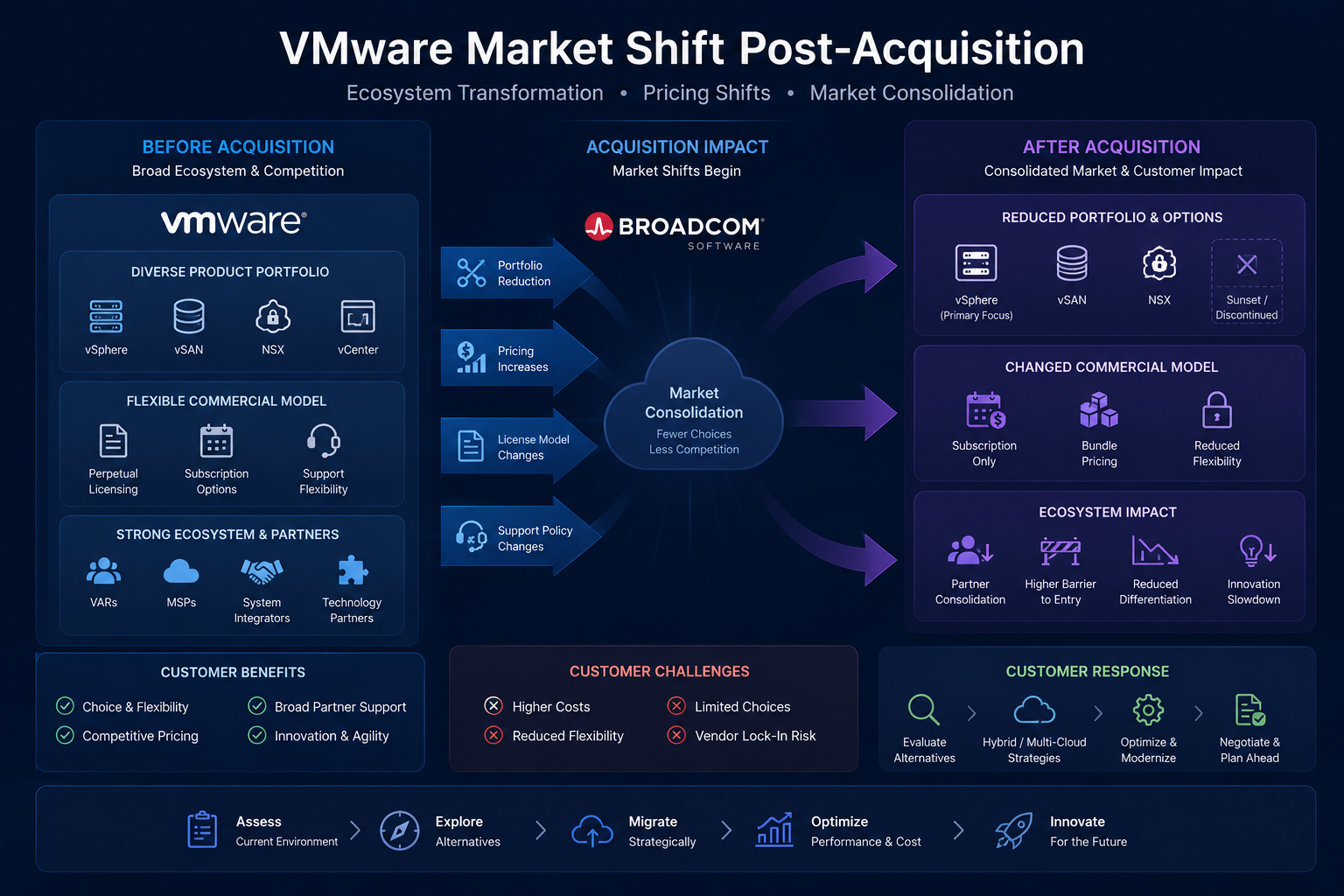
The virtualization market has undergone structural change following Broadcom’s acquisition of VMware. Enterprises are encountering:

  • Subscription‑only licensing models
  • Consolidated product bundles
  • Reduced flexibility in SKU selection
  • Higher minimum commitments
  • Escalating support and renewal costs

For large environments, even modest per‑core increases translate into multimilliondollar impacts annually.

Technical and Operational Limitations of Traditional Virtualization

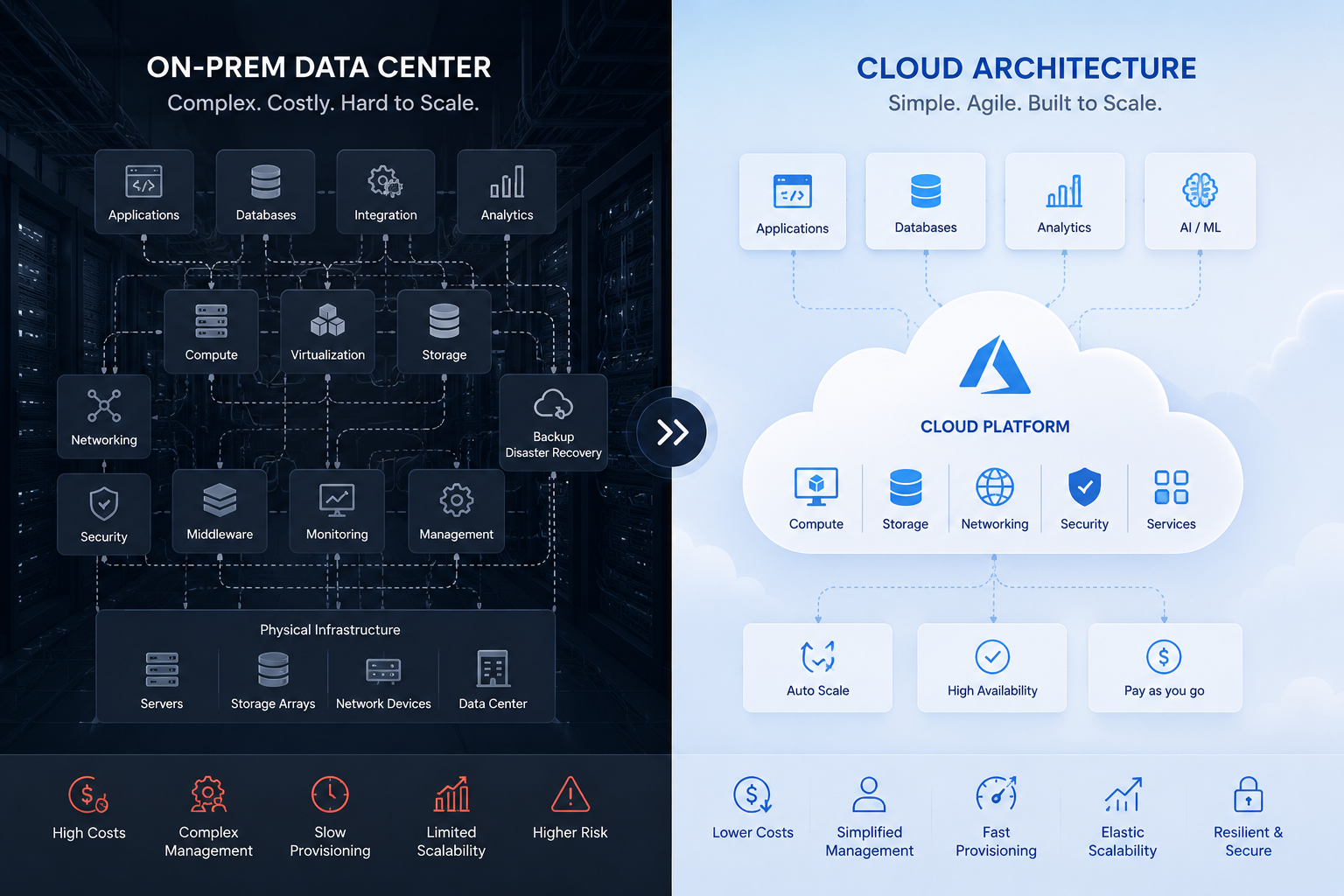
Limitations of traditional on‑prem virtualization, WCT, VMware, Virtual machines, WaferWire

Operational Drag

  • Hardware refresh cycles every 3-5 years
  • Patch management and lifecycle overhead
  • Power, cooling, and data center dependencies

Scalability Constraints

  • Capacity planning tied to capital investment
  • Licensing costs scaling linearly with growth
  • Slow provisioning for new initiatives

Innovation Barriers

  • Limited integration with modern analytics and AI platforms
  • Increased friction for DevOps and automation
  • Difficulty supporting hybrid and distributed workloads

Strategic Modernization Approach: From Virtualization to Cloud Operating Model

Leading enterprises are not merely migrating infrastructure, they are adopting a cloud operating model.

Key strategic shifts include:

  • Moving from capital‑intensive infrastructure to consumption‑based economics
  • Embedding governance, security, and cost controls by design
  • Enabling elastic scalability aligned to business demand
  • Preparing platforms for data, analytics, and AI innovation

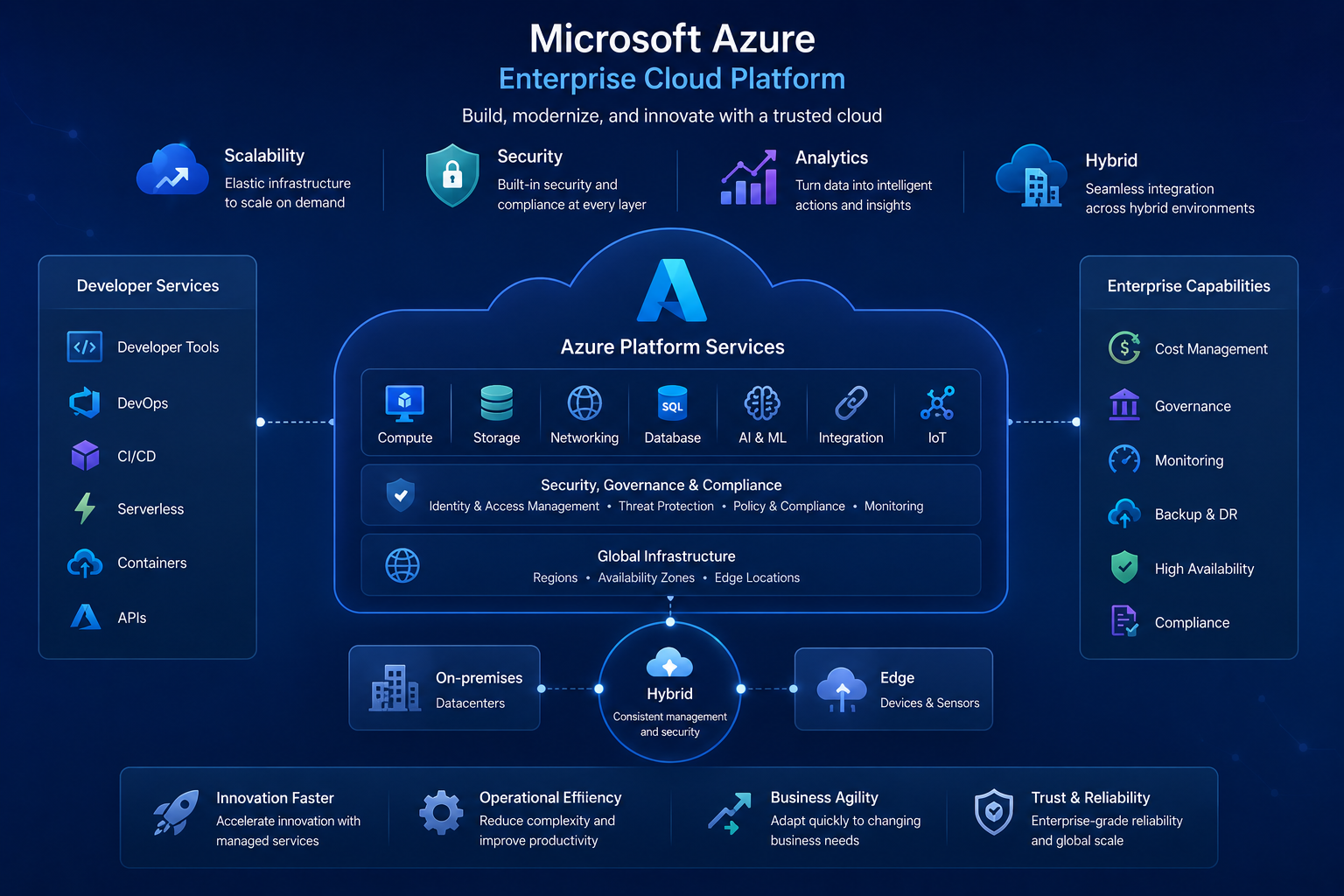
Azure provides the architectural foundation to support this shift.

Why Enterprises Are Choosing Azure Over VMware

Azure addresses both cost pressure and strategic modernization needs.

Financial Flexibility

  • Pay‑as‑you‑go consumption
  • Reserved Instances and Savings Plans
  • Azure Hybrid Benefit for Windows and SQL Server

Enterprise‑Grade Scalability

  • On‑demand resource provisioning
  • Global footprint and availability zones
  • Native hybrid and multicloud support

Built‑In Security and Compliance

  • Zero Trust architecture
  • Microsoft Defender and Sentinel
  • Industry and regulatory certifications

Migration Realities:

Why VMware to Azure Is Not a LiftandShift Exercise

Successful transitions require intentional architecture decisions.

Key considerations include:

  • Application dependency mapping
  • Performance and latency requirements
  • Data gravity and integration patterns
  • Compliance and residency constraints
  • Downtime tolerance and business continuity

Without expertise, migrations risk becoming costly replatforming exercises rather than transformation initiatives.

How WCT Enables a Controlled, Outcome‑Driven Transition

WCT approaches VMware to Azure transitions as business modernization programs, not infrastructure moves.

Assessment & Architecture

  • Workload classification and dependency analysis
  • Azure landing zone design
  • Cost modeling and ROI forecasting

Migration & Optimization

  • Rehost, replatform, refactor decisions
  • Secure data migration with minimal disruption
  • Performance tuning and right‑sizing

Governance & Operations

  • FinOps frameworks
  • Security and compliance controls
  • Ongoing optimization and modernization

Measurable Business Outcomes

Organizations working with WCT commonly achieve:

  • 20-40% reduction in infrastructure TCO
  • Improved cost predictability
  • Faster provisioning and time‑to‑market
  • Enhanced resilience and disaster recovery
  • Stronger foundation for analytics and AI

Governance, Security, and Scalability by Design

Azure’s native capabilities, combined with WCT’s governance frameworks, enable:

  • Policy‑driven access control
  • Continuous cost monitoring
  • Automated compliance enforcement
  • Secure hybrid operations

This ensures cloud adoption scales responsibly.

Conclusion: From Cost Shock to Competitive Advantage

When virtualization costs suddenly double, enterprises face a defining choice:
absorb the cost, or redesign the operating model.

For forward‑looking organizations, VMware cost escalation becomes the catalyst for modernization. Azure offers not just an alternative platform, but a strategic foundation for longterm growth.

With WCT as a transformation partner, enterprises can move deliberately, reducing cost, modernizing architecture, and positioning themselves for an AI‑driven future.

Need to discuss on

Talk to us today

radio-icon

Subscribe to Our Newsletter

Get instant updates in your email without missing any news

Thank you! Your submission has been received!
Oops! Something went wrong while submitting the form.

Copyright © 2025 WaferWire Cloud Technologies

Send us a message
We cannot wait to hear from you!
Hey! This is Luna from WaferWire, drop us a message below and we will get back to you asap :)
Thank you! Your submission has been received!
Oops! Something went wrong while submitting the form.

Back to Blogs
What Happens When Virtualization Costs Suddenly Double?
Written by
Madhava Kumar Devarapalli
on
May 25th, 2026
what-happens-when-virtualization-costs-suddenly-double

When Infrastructure Economics Break the Model

For more than a decade, VMware formed the backbone of enterprise virtualization strategies. It delivered stability, abstraction, and operational control, at a predictable cost. That economic equation has changed.

Across industries, enterprises are encountering sudden and significant increases in VMware licensing and support costs, in some cases doubling within a single renewal cycle. For CIOs, CTOs, and CFOs alike, this is no longer a procurement issue, it is a strategic inflection point.

Rising virtualization costs are forcing organizations to re-assess long‑term infrastructure sustainability, cloud readiness, and modernization priorities.  

The conversation has shifted from How do we optimize VMware? to Is our current Infra model still viable?

For many enterprises, that re-assessment leads to AVS (Azure VMware Solution), not simply as a cost‑reduction tactic, but as a foundation for scalable, governed, and AI‑ready transformation.
This is where WaferWire Cloud Technologies (WCT) plays a critical role.

The Business Challenge: When Virtualization Becomes a Growth Constraint

Virtualization was meant to reduce cost and complexity. When costs escalate unpredictably, the model breaks down.

Enterprises facing sharp VMware price increases commonly experience:

  • Budget volatility that undermines financial planning
  • Deferred digital transformation and modernization initiatives
  • Reduced funding for analytics, security, and AI programs
  • Increased executive scrutiny of IT operating models

Infrastructure stops being an enabler and becomes a constraint on innovation.

Why VMware Costs Are Rising?

VMware market changes driving higher licensing costs

The virtualization market has undergone structural change following Broadcom’s acquisition of VMware. Enterprises are encountering:

  • Subscription‑only licensing models
  • Consolidated product bundles
  • Reduced flexibility in SKU selection
  • Higher minimum commitments
  • Escalating support and renewal costs

For large environments, even modest per‑core increases translate into multimilliondollar impacts annually.

Technical and Operational Limitations of Traditional Virtualization

Limitations of traditional on‑prem virtualization, WCT, VMware, Virtual machines, WaferWire

Operational Drag

  • Hardware refresh cycles every 3-5 years
  • Patch management and lifecycle overhead
  • Power, cooling, and data center dependencies

Scalability Constraints

  • Capacity planning tied to capital investment
  • Licensing costs scaling linearly with growth
  • Slow provisioning for new initiatives

Innovation Barriers

  • Limited integration with modern analytics and AI platforms
  • Increased friction for DevOps and automation
  • Difficulty supporting hybrid and distributed workloads

Strategic Modernization Approach: From Virtualization to Cloud Operating Model

Leading enterprises are not merely migrating infrastructure, they are adopting a cloud operating model.

Key strategic shifts include:

  • Moving from capital‑intensive infrastructure to consumption‑based economics
  • Embedding governance, security, and cost controls by design
  • Enabling elastic scalability aligned to business demand
  • Preparing platforms for data, analytics, and AI innovation

Azure provides the architectural foundation to support this shift.

Why Enterprises Are Choosing Azure Over VMware

Azure addresses both cost pressure and strategic modernization needs.

Financial Flexibility

  • Pay‑as‑you‑go consumption
  • Reserved Instances and Savings Plans
  • Azure Hybrid Benefit for Windows and SQL Server

Enterprise‑Grade Scalability

  • On‑demand resource provisioning
  • Global footprint and availability zones
  • Native hybrid and multicloud support

Built‑In Security and Compliance

  • Zero Trust architecture
  • Microsoft Defender and Sentinel
  • Industry and regulatory certifications

Migration Realities:

Why VMware to Azure Is Not a LiftandShift Exercise

Successful transitions require intentional architecture decisions.

Key considerations include:

  • Application dependency mapping
  • Performance and latency requirements
  • Data gravity and integration patterns
  • Compliance and residency constraints
  • Downtime tolerance and business continuity

Without expertise, migrations risk becoming costly replatforming exercises rather than transformation initiatives.

How WCT Enables a Controlled, Outcome‑Driven Transition

WCT approaches VMware to Azure transitions as business modernization programs, not infrastructure moves.

Assessment & Architecture

  • Workload classification and dependency analysis
  • Azure landing zone design
  • Cost modeling and ROI forecasting

Migration & Optimization

  • Rehost, replatform, refactor decisions
  • Secure data migration with minimal disruption
  • Performance tuning and right‑sizing

Governance & Operations

  • FinOps frameworks
  • Security and compliance controls
  • Ongoing optimization and modernization

Measurable Business Outcomes

Organizations working with WCT commonly achieve:

  • 20-40% reduction in infrastructure TCO
  • Improved cost predictability
  • Faster provisioning and time‑to‑market
  • Enhanced resilience and disaster recovery
  • Stronger foundation for analytics and AI

Governance, Security, and Scalability by Design

Azure’s native capabilities, combined with WCT’s governance frameworks, enable:

  • Policy‑driven access control
  • Continuous cost monitoring
  • Automated compliance enforcement
  • Secure hybrid operations

This ensures cloud adoption scales responsibly.

Conclusion: From Cost Shock to Competitive Advantage

When virtualization costs suddenly double, enterprises face a defining choice:
absorb the cost, or redesign the operating model.

For forward‑looking organizations, VMware cost escalation becomes the catalyst for modernization. Azure offers not just an alternative platform, but a strategic foundation for longterm growth.

With WCT as a transformation partner, enterprises can move deliberately, reducing cost, modernizing architecture, and positioning themselves for an AI‑driven future.

Thank you! Your submission has been received!
Oops! Something went wrong while submitting the form.
Frequently Asked Questions  

1. Why are VMware costs increasing so rapidly?

Licensing and subscription changes following Broadcom’s acquisition have significantly altered VMware’s pricing model.

2. Is Azure truly cheaper than VMware?

For many workloads, Azure delivers lower TCO through consumption pricing, licensing benefits, and reduced operational overhead.

3. Can we run VMware workloads natively in Azure?

Yes, Azure VMware Solution (AVS) supports this, but many organizations pursue modernization beyond AVS.

4. How long does a VMware to Azure migration take?

Timelines vary based on application complexity, dependencies, and governance requirements.

5. Can legacy applications move to Azure?

Most can be rehosted, replatformed, or modernized with the right strategy.

6. What are the biggest migration risks?

Poor assessment, lack of governance, and insufficient optimization planning.

7. How does WCT reduce migration risk?

Through structured assessments, phased execution, and governance‑first design.

8. Does Azure support compliance requirements?

Yes, Azure supports a wide range of global compliance standards.

9. What role does FinOps play?

FinOps ensures ongoing cost optimization and financial accountability in Azure.

10. Is cloud migration a onetime effort?

No. Migration is the start of continuous optimization and modernization.

Read Other Blogs
cognition.thrives (here);
WCT (WaferWire Cloud Technologies) partners with organizations to build AI-ready systems where human judgment thrives, technology serves people, and progress creates shared prosperity
WaferWire Cloud Technologies,
4034 148th Ave NE Redmond
WA 98052 | +1-425-484-3430
© 2026 WCT. All rights reserved.
Let's Talk