


Thank you! Your submission has been received!
Oops! Something went wrong while submitting the form.




Enterprises built on MySQL are scaling faster than ever, but their database architecture often isn’t. Aging MySQL deployments introduce operational overhead, performance bottlenecks, and increasing security risk. Manual patching, high-availability engineering, and costly VM-based infrastructure slow modernization initiatives and make it harder to support data-driven innovation.
Azure Database for MySQL Flexible Server removes these barriers. By combining enterprise-grade resiliency, cloud-optimized performance, and fully managed operations with familiar MySQL capabilities, it enables teams to scale efficiently while reducing TCO and operational burden.
This blog breaks down the modernization drivers affecting MySQL environments today, and how Azure Flexible Server provides the future-ready data foundation required for open-source innovation in the cloud.
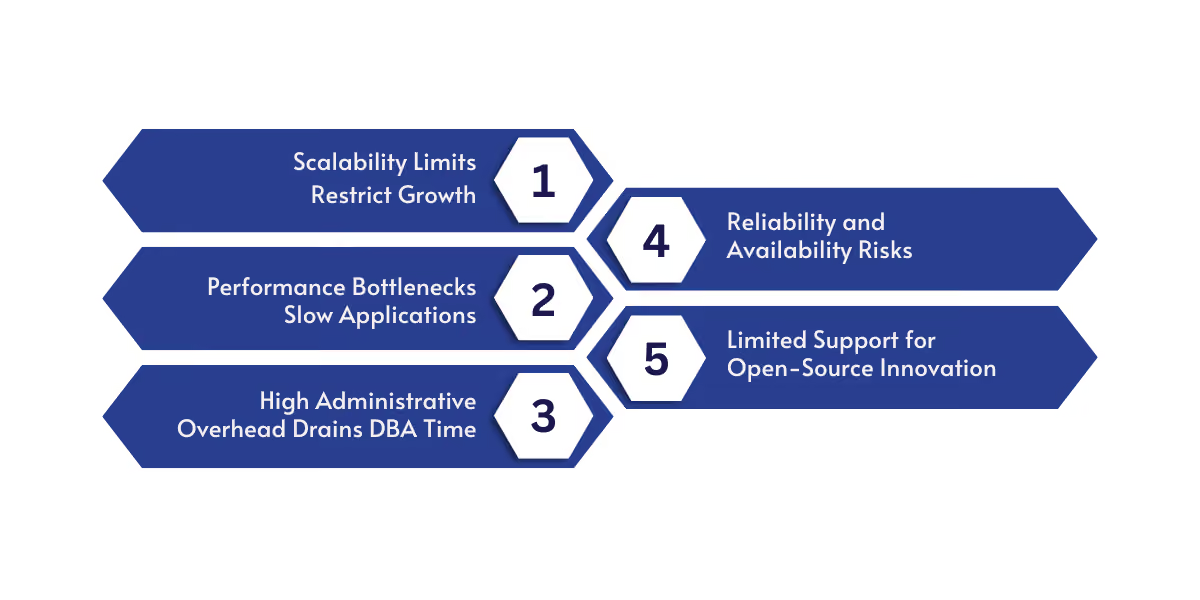
MySQL has powered essential business applications for years, from e-commerce platforms to internal operational systems. But many deployments were built long before cloud-native automation and elastic scale became standard. As demand grows, these environments become harder to operate, slower to evolve, and increasingly costly to maintain.
Here’s what IT leaders are struggling with today, and why modernization has become a priority:
Traditional MySQL setups can’t quickly adapt to changing workload patterns.
How it impacts the business:
Key issues inside the database:
As data grows, legacy MySQL infrastructure can’t keep up.
Operational symptoms:
Root causes:
Business impact:
Manual operations include:
Traditional HA for MySQL requires complex engineering and constant maintenance.
Risk exposure:
Critical challenge:
Legacy environments often block modernization initiatives.
Why this matters today:
Legacy MySQL deployments slow product delivery, increase operational risk, and inflate total cost of ownership, holding organizations back from the speed and innovation the cloud can unlock.
Suggested read: Azure Cloud Modernization Strategies for the Future
Azure Database for MySQL Flexible Server delivers immediate modernization value, faster performance, lower operational effort, and resilient scaling, enabling organizations to run mission-critical MySQL workloads with greater agility and confidence.
Here’s how costs compare when shifting from self-managed MySQL to Azure’s fully managed MySQL Flexible Server:
Suggested Read: Modernizing Business Processes for Digital Success
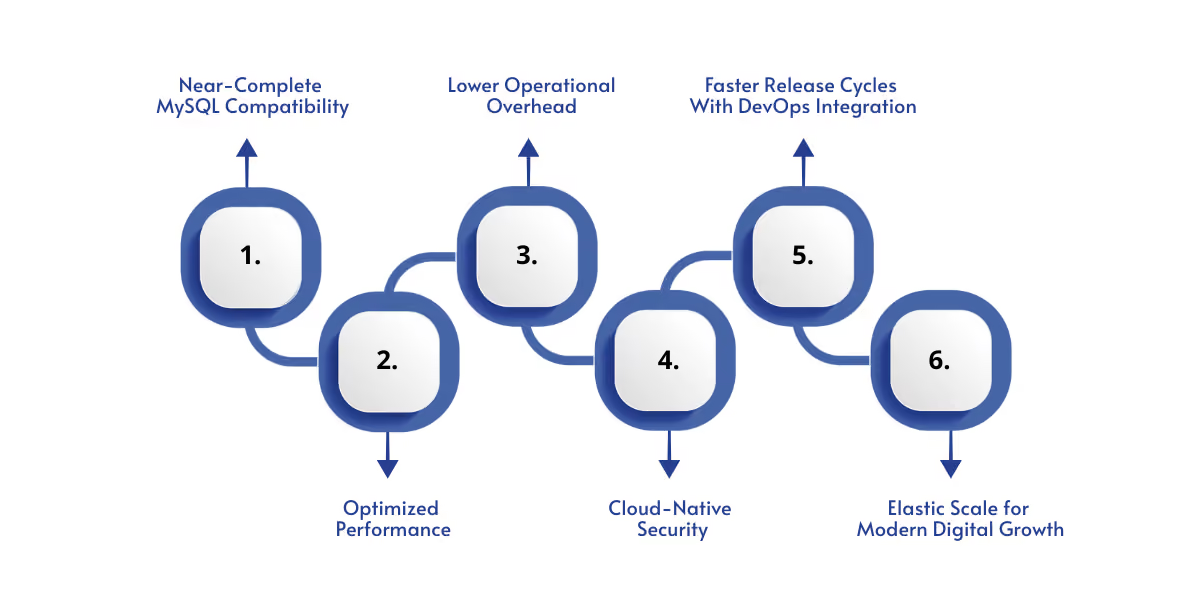
Azure Database for MySQL Flexible Server gives enterprises a fast, low-risk path to modernize MySQL workloads with built-in automation, performance controls, and cloud-native resiliency. It maintains MySQL compatibility while removing the heavy operational responsibilities of managing infrastructure, scaling, backups, and security.
Here’s how Azure Flexible Server delivers immediate impact:
Impact → Faster migration with less engineering rework
Impact → Higher throughput and more consistent end-user experience
Impact → Teams shift focus from administration to innovation
Impact → Reduced security exposure and compliance risk
Impact → Updates ship faster with improved stability
Impact → Better global scalability without disruption
Modernized MySQL workloads run faster, cost less, and support rapid innovation, without rewriting applications or increasing operational risk.
Suggested read: Understanding Microsoft Fabric SQL databases
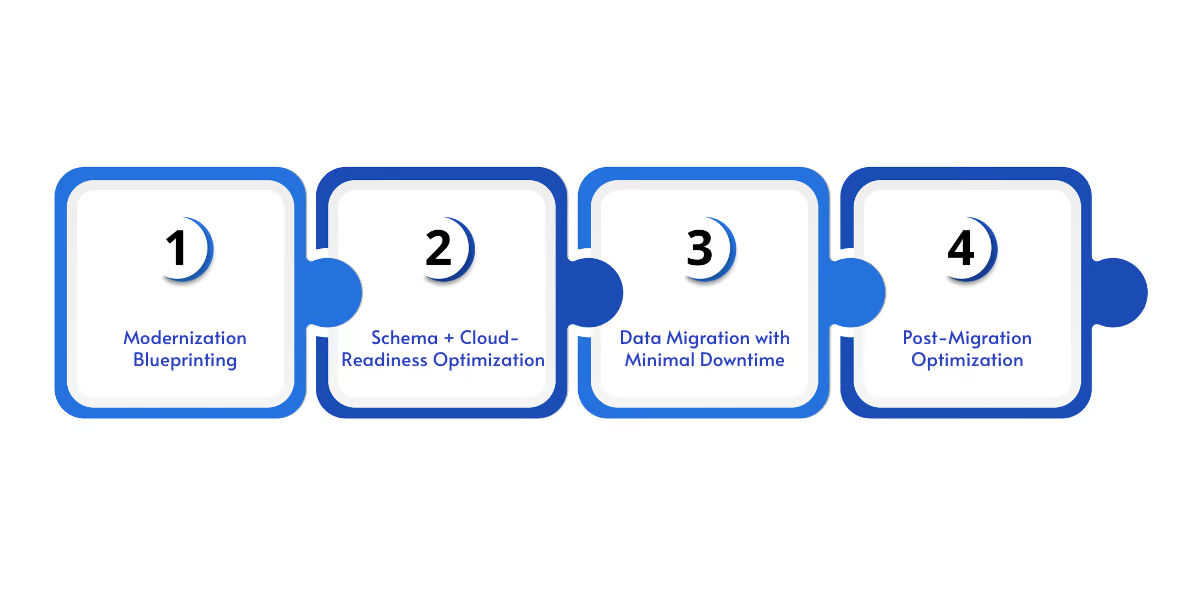
Modernizing MySQL workloads is more than migrating databases, it requires compatibility checks, secure execution, performance tuning, and strong governance from day one. WCT delivers a structured, accelerator-powered modernization approach that makes the move to Azure Database for MySQL Flexible Server faster, predictable, and outcome-driven.
Here’s how WCT drives successful transformations from assessment to optimization:
WCT starts with automated insight to eliminate uncertainty:
Impact → 40–50% faster planning with higher accuracy
WCT prepares applications to operate reliably and securely in the cloud:
Outcome → Stronger performance + future-ready architecture
WCT ensures business-critical workloads remain available throughout modernization:
Outcome → Near-zero-downtime migration for sensitive systems
Modernization doesn’t stop after cutover, WCT ensures operational excellence:
Result → High reliability with lower operational burden
Organizations that modernize MySQL with WCT consistently achieve:
A regional utility company managing power distribution and outage monitoring relied on a legacy MySQL system hosted on aging on-prem servers.
Challenges
How WCT Helped
Results Delivered
Suggested read: Key Cloud Compliance Certifications for Healthcare Data Modernization 2025
Your MySQL database doesn’t need to hold back your next phase of digital growth. With the right cloud strategy, modernization becomes a driver of performance, resilience, and innovation, not disruption.
WCT helps enterprises:
If your MySQL environment is scaling faster than your infrastructure can support, we can help you modernize with clarity, speed, and measurable ROI. Book a consultation with WaferWire today.
1. Do we need to refactor our applications to migrate to Azure MySQL Flexible Server?
In most cases, no. High compatibility means schemas and logic remain intact, minimizing code changes and migration risk.
2. Can WCT ensure a zero-downtime migration?
Yes. With continuous data sync and phased cutovers, WCT keeps business services running while modernization progresses in the background.
3. How does Azure Flexible Server improve performance?
It provides burstable compute, automatic scaling, and advanced tuning controls — which reduce latency and improve throughput during peak demand.
4. What kind of cost savings can we expect after modernization?
By eliminating hardware, licensing overhead, and manual operations, organizations typically reduce operational expenses by 30–50% within the first year.
5. How does WCT maintain security and compliance?
We implement private networking, managed identity control, advanced encryption, and proactive monitoring aligned to enterprise compliance needs.



Enterprises built on MySQL are scaling faster than ever, but their database architecture often isn’t. Aging MySQL deployments introduce operational overhead, performance bottlenecks, and increasing security risk. Manual patching, high-availability engineering, and costly VM-based infrastructure slow modernization initiatives and make it harder to support data-driven innovation.
Azure Database for MySQL Flexible Server removes these barriers. By combining enterprise-grade resiliency, cloud-optimized performance, and fully managed operations with familiar MySQL capabilities, it enables teams to scale efficiently while reducing TCO and operational burden.
This blog breaks down the modernization drivers affecting MySQL environments today, and how Azure Flexible Server provides the future-ready data foundation required for open-source innovation in the cloud.
MySQL has powered essential business applications for years, from e-commerce platforms to internal operational systems. But many deployments were built long before cloud-native automation and elastic scale became standard. As demand grows, these environments become harder to operate, slower to evolve, and increasingly costly to maintain.
Here’s what IT leaders are struggling with today, and why modernization has become a priority:
Traditional MySQL setups can’t quickly adapt to changing workload patterns.
How it impacts the business:
Key issues inside the database:
As data grows, legacy MySQL infrastructure can’t keep up.
Operational symptoms:
Root causes:
Business impact:
Manual operations include:
Traditional HA for MySQL requires complex engineering and constant maintenance.
Risk exposure:
Critical challenge:
Legacy environments often block modernization initiatives.
Why this matters today:
Legacy MySQL deployments slow product delivery, increase operational risk, and inflate total cost of ownership, holding organizations back from the speed and innovation the cloud can unlock.
Suggested read: Azure Cloud Modernization Strategies for the Future
Azure Database for MySQL Flexible Server delivers immediate modernization value, faster performance, lower operational effort, and resilient scaling, enabling organizations to run mission-critical MySQL workloads with greater agility and confidence.
Here’s how costs compare when shifting from self-managed MySQL to Azure’s fully managed MySQL Flexible Server:
Suggested Read: Modernizing Business Processes for Digital Success
Azure Database for MySQL Flexible Server gives enterprises a fast, low-risk path to modernize MySQL workloads with built-in automation, performance controls, and cloud-native resiliency. It maintains MySQL compatibility while removing the heavy operational responsibilities of managing infrastructure, scaling, backups, and security.
Here’s how Azure Flexible Server delivers immediate impact:
Impact → Faster migration with less engineering rework
Impact → Higher throughput and more consistent end-user experience
Impact → Teams shift focus from administration to innovation
Impact → Reduced security exposure and compliance risk
Impact → Updates ship faster with improved stability
Impact → Better global scalability without disruption
Modernized MySQL workloads run faster, cost less, and support rapid innovation, without rewriting applications or increasing operational risk.
Suggested read: Understanding Microsoft Fabric SQL databases
Modernizing MySQL workloads is more than migrating databases, it requires compatibility checks, secure execution, performance tuning, and strong governance from day one. WCT delivers a structured, accelerator-powered modernization approach that makes the move to Azure Database for MySQL Flexible Server faster, predictable, and outcome-driven.
Here’s how WCT drives successful transformations from assessment to optimization:
WCT starts with automated insight to eliminate uncertainty:
Impact → 40–50% faster planning with higher accuracy
WCT prepares applications to operate reliably and securely in the cloud:
Outcome → Stronger performance + future-ready architecture
WCT ensures business-critical workloads remain available throughout modernization:
Outcome → Near-zero-downtime migration for sensitive systems
Modernization doesn’t stop after cutover, WCT ensures operational excellence:
Result → High reliability with lower operational burden
Organizations that modernize MySQL with WCT consistently achieve:
A regional utility company managing power distribution and outage monitoring relied on a legacy MySQL system hosted on aging on-prem servers.
Challenges
How WCT Helped
Results Delivered
Suggested read: Key Cloud Compliance Certifications for Healthcare Data Modernization 2025
Your MySQL database doesn’t need to hold back your next phase of digital growth. With the right cloud strategy, modernization becomes a driver of performance, resilience, and innovation, not disruption.
WCT helps enterprises:
If your MySQL environment is scaling faster than your infrastructure can support, we can help you modernize with clarity, speed, and measurable ROI. Book a consultation with WaferWire today.
1. Do we need to refactor our applications to migrate to Azure MySQL Flexible Server?
In most cases, no. High compatibility means schemas and logic remain intact, minimizing code changes and migration risk.
2. Can WCT ensure a zero-downtime migration?
Yes. With continuous data sync and phased cutovers, WCT keeps business services running while modernization progresses in the background.
3. How does Azure Flexible Server improve performance?
It provides burstable compute, automatic scaling, and advanced tuning controls — which reduce latency and improve throughput during peak demand.
4. What kind of cost savings can we expect after modernization?
By eliminating hardware, licensing overhead, and manual operations, organizations typically reduce operational expenses by 30–50% within the first year.
5. How does WCT maintain security and compliance?
We implement private networking, managed identity control, advanced encryption, and proactive monitoring aligned to enterprise compliance needs.



.svg)
