




Thank you! Your submission has been received!
Oops! Something went wrong while submitting the form.


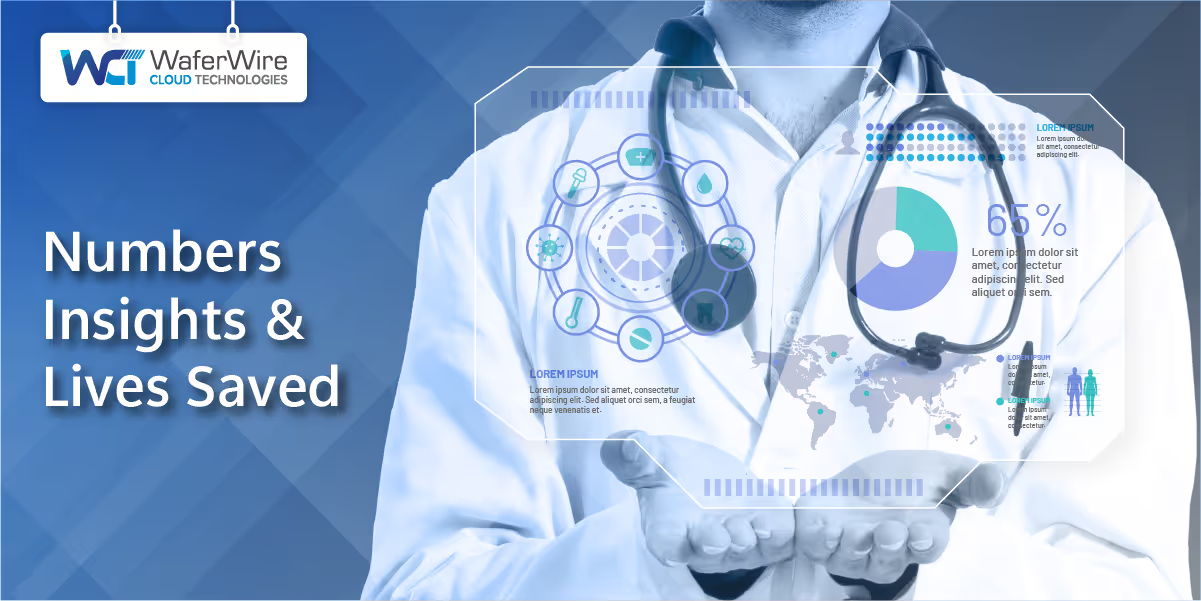
"Harmonizing scattered healthcare data is the symphony that orchestrates improved patient care and transformative medical insights." - Anonymous. This quote highlights how data is the cornerstone of critical decisions, treatment methodologies, and patient well-being in today's healthcare realm. However, the intricate challenge emerges when we confront the task of processing and dissecting the expansive and diverse expanse of healthcare data scattered across various platforms. Electronic health records (EHRs), medical instruments, patient surveys, and administrative databases contribute to massive volumes of data. And this volume poses a challenge. Picture a scenario where a patient's medical history is distributed across numerous systems, resulting in fragmented information. This fragmented information hampers comprehensive care coordination and well-informed decision-making. It further necessitates innovative solutions to collate and effectively harness the potential of disparate healthcare data.
Let's contemplate a patient's journey seeking specialized consultations for various health issues. As the patient's medical history spreads across distinct healthcare facilities, hospitals, clinics, and laboratories, each repository contains valuable insights into their medical background—ranging from test outcomes to diagnoses and treatment regimens. Nonetheless, these data fragments do not coalesce to paint a complete picture of the patient's health. The consequence?
The healthcare industry is generating data at an astonishing rate. The healthcare industry emerges as a prolific generator, contributing to nearly 30% of the world's expansive data volume. As we peer into the near future, the trajectory of data growth within healthcare is staggering—a projected compound annual growth rate of 36% by 2025. This ascent in data is not only impressive but also outpaces other sectors significantly. With a pace that is 6% swifter than manufacturing, 10% ahead of financial services, and an impressive 11% ahead of media and entertainment, healthcare's data surge stands as a testament to its dynamic evolution.
Clinical researchers and pharmaceutical companies stand to gain significantly from employing big data analytics platforms:
Implementing a big data analytics platform in the healthcare sector is a significant endeavor that requires careful planning, preparation, and execution. Here are the key prerequisites to consider before embarking on this transformative journey:
By addressing these prerequisites, healthcare organizations can lay a solid foundation for implementing a big data analytics platform that unlocks the transformative potential of data-driven insights. The process involves collaboration, strategic planning, and a commitment to leveraging data for improved patient care, research advancements, and operational excellence.
Ready to implement big data analytics for better healthcare?
Step-by-step implementation: Employing big data analytics in healthcare Here's a comprehensive roadmap for healthcare organizations to effectively employ big data analytics platforms:
Implementing a big data analytics platform in a healthcare organization comes with its fair share of challenges. However, with careful planning and strategic approaches, these challenges can be addressed effectively. Here are some potential challenges and ways to resolve them:
By addressing these challenges proactively, healthcare organizations can pave the way for a successful implementation of a big data analytics platform. Collaboration between IT, healthcare professionals, and stakeholders is key to overcoming these hurdles and unlocking the full potential of data-driven insights in healthcare.
Do you want to overcome healthcare data challenges?
As data insights drive innovation and precision, selecting the right big data analytics platform is paramount. Here are some of the leading platforms that are transforming healthcare data analysis: IBM Watson Health IBM Watson Health is a stalwart in healthcare analytics, renowned for its advanced artificial intelligence (AI) and machine learning (ML) capabilities. This platform offers tools that seamlessly integrate and dissect clinical, research, and patient-generated data. By harnessing the power of AI and ML, Watson Health enables healthcare organizations to extract profound insights from diverse datasets, fostering a data-driven approach to medical breakthroughs, personalized care, and operational efficiency. Google Cloud Healthcare API Google's Cloud Healthcare API provides healthcare institutions with a secure and efficient solution to store, process, and analyze healthcare data within the cloud. This platform offers a robust ecosystem for managing and leveraging data, ensuring compliance with regulations while facilitating seamless data sharing and collaboration. With its cloud-based capabilities, Google Cloud Healthcare API empowers healthcare organizations to unlock the potential of their data in an environment that prioritizes scalability and accessibility. SAS Healthcare Analytics SAS Healthcare Analytics is a pinnacle of tailored solutions for the healthcare sector. With a deep understanding of the industry's nuances, SAS offers analytics tools that cater specifically to healthcare needs. From managing patient data and optimizing clinical workflows to enhancing overall operational efficiency, SAS Healthcare Analytics equips healthcare organizations with the ability to extract valuable insights that drive informed decisions and elevate patient care. Tableau Tableau's prowess in data visualization takes center stage in the healthcare domain. This platform empowers healthcare professionals with the ability to craft interactive and shareable visualizations that decipher complex trends and insights with remarkable clarity. By transforming intricate data into intuitive visuals, Tableau transforms data into actionable insights. These insights guide healthcare practitioners in making well-informed decisions, optimizing resource allocation, and enhancing patient outcomes. Power BI Power BI, Microsoft's business intelligence platform, empowers healthcare organizations with the ability to transform raw data into meaningful insights. While not exclusively a big data analytics platform, Power BI excels at processing and analyzing structured data, making it an asset for healthcare analytics. Its user-friendly interface and comprehensive visualization tools enable healthcare professionals to create compelling dashboards and reports, facilitating data-driven decision-making and unlocking actionable insights. In the dynamic landscape of healthcare, each of these big data analytics platforms plays a unique role in empowering healthcare organizations to navigate the complexities of data, extract actionable insights, and drive transformative advancements. The choice of platform depends on the organization's specific needs, data volume, and analytical requirements, ultimately contributing to a healthier future powered by data-driven excellence. In conclusion, the implementation of big data analytics platforms in healthcare offers a transformative solution to the fragmented data challenge. By integrating and analyzing diverse datasets, these platforms empower clinical researchers, pharmaceutical companies, and healthcare providers with actionable insights that drive innovation, improve patient outcomes, and propel the healthcare industry into a data-driven era. Collaborating with experienced data and analytics partners becomes essential for organizations seeking to navigate the complexities of implementing and leveraging big data analytics platforms effectively. These partners bring valuable expertise, guiding healthcare organizations through the intricacies of data integration, security, compliance, and advanced analytics. Their knowledge ensures that the implementation aligns with industry standards and best practices, minimizing risks and optimizing outcomes. As healthcare continues to evolve, the ability to harness the potential of data becomes a competitive advantage. Big data analytics platforms not only address current challenges but also equip healthcare organizations with the tools needed to remain agile in the face of future changes. By harnessing the power of data, healthcare can transition from reactive to proactive, from fragmented to interconnected, and from traditional to transformative. Through these advancements, the promise of improved patient care, accelerated research, and efficient operations becomes an achievable reality. In this era of information, healthcare organizations stand at the threshold of a new age—where data-driven decisions shape the future of healthcare. By embracing big data analytics platforms and collaborating with trusted partners, healthcare organizations can navigate this transformation with confidence, leading the way toward a healthier, data-driven tomorrow.



"Harmonizing scattered healthcare data is the symphony that orchestrates improved patient care and transformative medical insights." - Anonymous. This quote highlights how data is the cornerstone of critical decisions, treatment methodologies, and patient well-being in today's healthcare realm. However, the intricate challenge emerges when we confront the task of processing and dissecting the expansive and diverse expanse of healthcare data scattered across various platforms. Electronic health records (EHRs), medical instruments, patient surveys, and administrative databases contribute to massive volumes of data. And this volume poses a challenge. Picture a scenario where a patient's medical history is distributed across numerous systems, resulting in fragmented information. This fragmented information hampers comprehensive care coordination and well-informed decision-making. It further necessitates innovative solutions to collate and effectively harness the potential of disparate healthcare data.
Let's contemplate a patient's journey seeking specialized consultations for various health issues. As the patient's medical history spreads across distinct healthcare facilities, hospitals, clinics, and laboratories, each repository contains valuable insights into their medical background—ranging from test outcomes to diagnoses and treatment regimens. Nonetheless, these data fragments do not coalesce to paint a complete picture of the patient's health. The consequence?
The healthcare industry is generating data at an astonishing rate. The healthcare industry emerges as a prolific generator, contributing to nearly 30% of the world's expansive data volume. As we peer into the near future, the trajectory of data growth within healthcare is staggering—a projected compound annual growth rate of 36% by 2025. This ascent in data is not only impressive but also outpaces other sectors significantly. With a pace that is 6% swifter than manufacturing, 10% ahead of financial services, and an impressive 11% ahead of media and entertainment, healthcare's data surge stands as a testament to its dynamic evolution.
Clinical researchers and pharmaceutical companies stand to gain significantly from employing big data analytics platforms:
Implementing a big data analytics platform in the healthcare sector is a significant endeavor that requires careful planning, preparation, and execution. Here are the key prerequisites to consider before embarking on this transformative journey:
By addressing these prerequisites, healthcare organizations can lay a solid foundation for implementing a big data analytics platform that unlocks the transformative potential of data-driven insights. The process involves collaboration, strategic planning, and a commitment to leveraging data for improved patient care, research advancements, and operational excellence.
Ready to implement big data analytics for better healthcare?
Step-by-step implementation: Employing big data analytics in healthcare Here's a comprehensive roadmap for healthcare organizations to effectively employ big data analytics platforms:
Implementing a big data analytics platform in a healthcare organization comes with its fair share of challenges. However, with careful planning and strategic approaches, these challenges can be addressed effectively. Here are some potential challenges and ways to resolve them:
By addressing these challenges proactively, healthcare organizations can pave the way for a successful implementation of a big data analytics platform. Collaboration between IT, healthcare professionals, and stakeholders is key to overcoming these hurdles and unlocking the full potential of data-driven insights in healthcare.
Do you want to overcome healthcare data challenges?
As data insights drive innovation and precision, selecting the right big data analytics platform is paramount. Here are some of the leading platforms that are transforming healthcare data analysis: IBM Watson Health IBM Watson Health is a stalwart in healthcare analytics, renowned for its advanced artificial intelligence (AI) and machine learning (ML) capabilities. This platform offers tools that seamlessly integrate and dissect clinical, research, and patient-generated data. By harnessing the power of AI and ML, Watson Health enables healthcare organizations to extract profound insights from diverse datasets, fostering a data-driven approach to medical breakthroughs, personalized care, and operational efficiency. Google Cloud Healthcare API Google's Cloud Healthcare API provides healthcare institutions with a secure and efficient solution to store, process, and analyze healthcare data within the cloud. This platform offers a robust ecosystem for managing and leveraging data, ensuring compliance with regulations while facilitating seamless data sharing and collaboration. With its cloud-based capabilities, Google Cloud Healthcare API empowers healthcare organizations to unlock the potential of their data in an environment that prioritizes scalability and accessibility. SAS Healthcare Analytics SAS Healthcare Analytics is a pinnacle of tailored solutions for the healthcare sector. With a deep understanding of the industry's nuances, SAS offers analytics tools that cater specifically to healthcare needs. From managing patient data and optimizing clinical workflows to enhancing overall operational efficiency, SAS Healthcare Analytics equips healthcare organizations with the ability to extract valuable insights that drive informed decisions and elevate patient care. Tableau Tableau's prowess in data visualization takes center stage in the healthcare domain. This platform empowers healthcare professionals with the ability to craft interactive and shareable visualizations that decipher complex trends and insights with remarkable clarity. By transforming intricate data into intuitive visuals, Tableau transforms data into actionable insights. These insights guide healthcare practitioners in making well-informed decisions, optimizing resource allocation, and enhancing patient outcomes. Power BI Power BI, Microsoft's business intelligence platform, empowers healthcare organizations with the ability to transform raw data into meaningful insights. While not exclusively a big data analytics platform, Power BI excels at processing and analyzing structured data, making it an asset for healthcare analytics. Its user-friendly interface and comprehensive visualization tools enable healthcare professionals to create compelling dashboards and reports, facilitating data-driven decision-making and unlocking actionable insights. In the dynamic landscape of healthcare, each of these big data analytics platforms plays a unique role in empowering healthcare organizations to navigate the complexities of data, extract actionable insights, and drive transformative advancements. The choice of platform depends on the organization's specific needs, data volume, and analytical requirements, ultimately contributing to a healthier future powered by data-driven excellence. In conclusion, the implementation of big data analytics platforms in healthcare offers a transformative solution to the fragmented data challenge. By integrating and analyzing diverse datasets, these platforms empower clinical researchers, pharmaceutical companies, and healthcare providers with actionable insights that drive innovation, improve patient outcomes, and propel the healthcare industry into a data-driven era. Collaborating with experienced data and analytics partners becomes essential for organizations seeking to navigate the complexities of implementing and leveraging big data analytics platforms effectively. These partners bring valuable expertise, guiding healthcare organizations through the intricacies of data integration, security, compliance, and advanced analytics. Their knowledge ensures that the implementation aligns with industry standards and best practices, minimizing risks and optimizing outcomes. As healthcare continues to evolve, the ability to harness the potential of data becomes a competitive advantage. Big data analytics platforms not only address current challenges but also equip healthcare organizations with the tools needed to remain agile in the face of future changes. By harnessing the power of data, healthcare can transition from reactive to proactive, from fragmented to interconnected, and from traditional to transformative. Through these advancements, the promise of improved patient care, accelerated research, and efficient operations becomes an achievable reality. In this era of information, healthcare organizations stand at the threshold of a new age—where data-driven decisions shape the future of healthcare. By embracing big data analytics platforms and collaborating with trusted partners, healthcare organizations can navigate this transformation with confidence, leading the way toward a healthier, data-driven tomorrow.




.svg)
